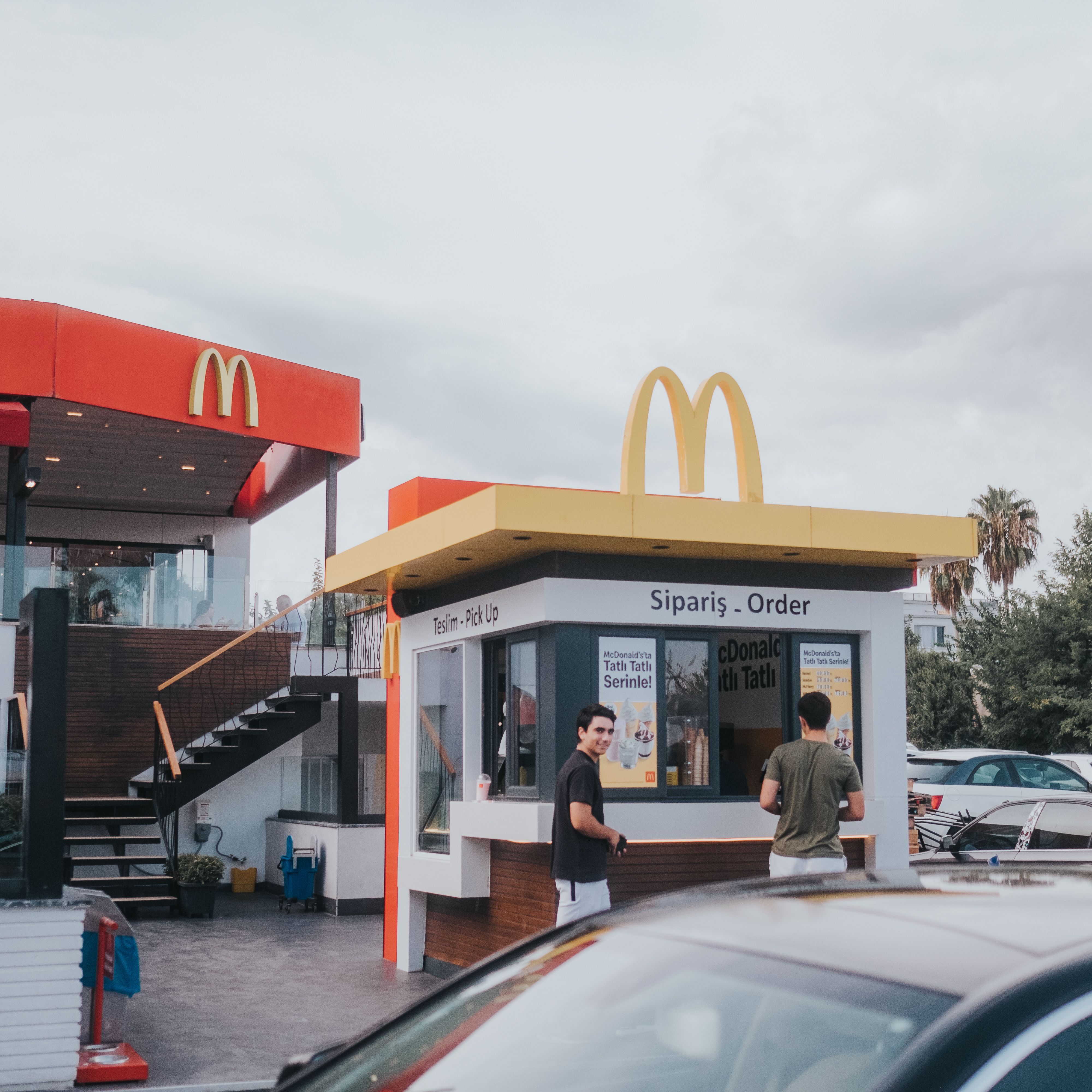
McDonald’s is taking another run at artificial intelligence in the drive-thru. This time, the company says the technology will be part of a broader effort to make ordering faster and more accurate for millions of customers.
The shift matters because drive-thru service is still the backbone of McDonald’s U.S. business. After an earlier AI partnership ended in 2024, the company is now moving ahead with a new plan that leans on voice technology, restaurant data, and upgraded equipment inside stores.
McDonald’s is reviving AI at the drive-thru after a public reset
McDonald’s made headlines on June 17, 2024, when it confirmed it would end a test using IBM’s automated voice-ordering technology at more than 100 restaurants. At the time, the company said it had learned a lot from the trial, but acknowledged that a broader rollout would require a different approach. Videos of confused orders had circulated online, putting extra attention on the limits of early AI ordering systems.
Even so, McDonald’s did not back away from automation. In its statement last year, the company said it remained confident that voice ordering would be part of its future restaurant operations. The company added that it would continue to evaluate long-term, scalable solutions that could help employees and improve the customer experience at the drive-thru.
That message has become clearer in 2025 as McDonald’s executives outlined a wider technology strategy for its restaurants. According to company leadership, the chain is working with Google Cloud on AI tools that can support operations across thousands of locations. Those tools include voice AI, equipment monitoring, and systems designed to help crew members respond faster during busy periods.
For customers, the biggest visible change is simple. More drive-thru lanes are expected to involve AI-assisted ordering, even if McDonald’s has not attached a firm national rollout date to every market. The surprise for many customers is not that AI exists, but that McDonald’s is returning to it so quickly after the earlier experiment was shelved.
Why the drive-thru is such a big deal for McDonald’s business

Drive-thru traffic is one of the most important parts of McDonald’s business in the United States. Analysts have long pointed out that speed, accuracy, and convenience are central reasons customers choose major fast-food chains over smaller rivals. At McDonald’s, even small improvements in wait times can matter across roughly 13,500 U.S. restaurants and millions of transactions.
The company has been under pressure to improve operations as customers become more price-sensitive and more demanding about convenience. Inflation has changed dining habits over the past two years, and many restaurant chains have leaned harder on value meals, app offers, and streamlined service. When the line at the speaker box slows down, that can affect labor, kitchen timing, and customer satisfaction all at once.
Executives have also talked about the challenge of handling increasingly complex orders. App promotions, limited-time menu items, customizations, and delivery integration all add layers to restaurant workflows. AI voice systems are being pitched as a way to keep ordering consistent, reduce misunderstandings, and free workers to focus on food preparation and in-person service.
There is another reason the company is pushing this now. Labor remains one of the biggest costs for restaurant operators, and hiring has been uneven in many markets. McDonald’s has not said AI is replacing large numbers of workers at the drive-thru, but it has repeatedly framed automation as a support tool that can help crews operate more efficiently during rush periods.
What customers may notice when the new system expands

For many customers, the first sign of change may simply be a different voice at the order speaker. Instead of speaking only with a crew member, some customers may interact with an automated system that can take an order, confirm menu items, and pass details to kitchen staff. In some cases, workers may still step in if the order is unusual or if the system needs help.
McDonald’s and other chains have argued that modern voice AI is getting better at recognizing accents, handling background noise, and understanding casual speech. That said, accuracy remains the key test. Customers tend to forgive a short wait more easily than a wrong order, especially during breakfast rushes or late-night visits when drive-thru traffic can pile up fast.
The company’s broader tech push goes beyond the speaker box. McDonald’s has discussed connected kitchen equipment and tools that can warn staff when machines need maintenance before a breakdown happens. If fryers, ice cream machines, or beverage systems are better monitored, restaurants may be able to avoid disruptions that frustrate customers and slow service.
There is also a competitive angle. Chains including Wendy’s, Taco Bell, and Hardee’s operators have all explored some form of AI ordering or automation. McDonald’s is the largest player in the group, so any wider deployment by the burger giant could shape what customers expect across the fast-food industry over the next few years.
The bigger question is whether customers will actually like it

The success of the change will likely come down to trust. Customers want fast service, but they also want to feel heard when they ask for a sauce on the side, a drink with no ice, or a last-minute menu swap. If AI can handle those everyday details smoothly, many people may not care whether a person or a machine started the order.
Still, McDonald’s is entering this next phase carefully after the lessons of the IBM test. That earlier rollout showed how quickly technology can become a public joke when an order goes wrong. It also showed that customers are willing to post their experiences online, which means even small errors can become a bigger brand problem in a matter of hours.
For McDonald’s, the potential payoff is hard to ignore. Faster service can improve sales, help stores move more cars through the line, and reduce pressure on workers during busy shifts. Better order accuracy can also cut food waste and lower the cost of remakes, which matters when restaurant margins are tight.
What happens next will be watched closely across the restaurant business. McDonald’s has the size, budget, and customer volume to test whether AI drive-thru ordering can finally become mainstream. If the rollout goes well, the company may change a routine part of American fast-food life that many customers never expected to shift so soon.