

The FIFA World Cup 2026 opens on June 11, 2026, and host cities are already promoting more than stadiums and fan zones. Across North America, street food is becoming part of the pitch as cities lean on iconic local dishes to welcome visitors.
Tourism agencies, restaurant groups and local vendors have increasingly folded food into World Cup messaging because it offers fans a fast, affordable way to experience each stop. Here are nine street foods, tied to nine host cities, that stand out early as likely crowd favorites.
Mexico City, Mexico: al pastor tacos

In Mexico City, al pastor tacos remain the clearest street-food symbol for visiting supporters. The dish, built from spit-roasted pork shaved onto small tortillas and topped with onion, cilantro and pineapple, is deeply tied to the capital’s everyday food culture and is widely available near transit hubs, markets and nightlife districts.
Mexico City is scheduled to host the opening match of the 2026 tournament at Estadio Azteca, making its food scene one of the first many international fans will encounter. Local tourism officials have repeatedly highlighted taquerías and late-night street stalls as part of the city’s appeal for major sporting events.
For visitors from the U.S. and Canada, al pastor is both familiar and notably different in its home setting, where preparation is faster, cheaper and often more specialized. Food historians have long pointed to the dish’s Lebanese influence, giving it a cross-cultural story that fits the multinational tournament.
Los Angeles, United States: bacon-wrapped hot dogs
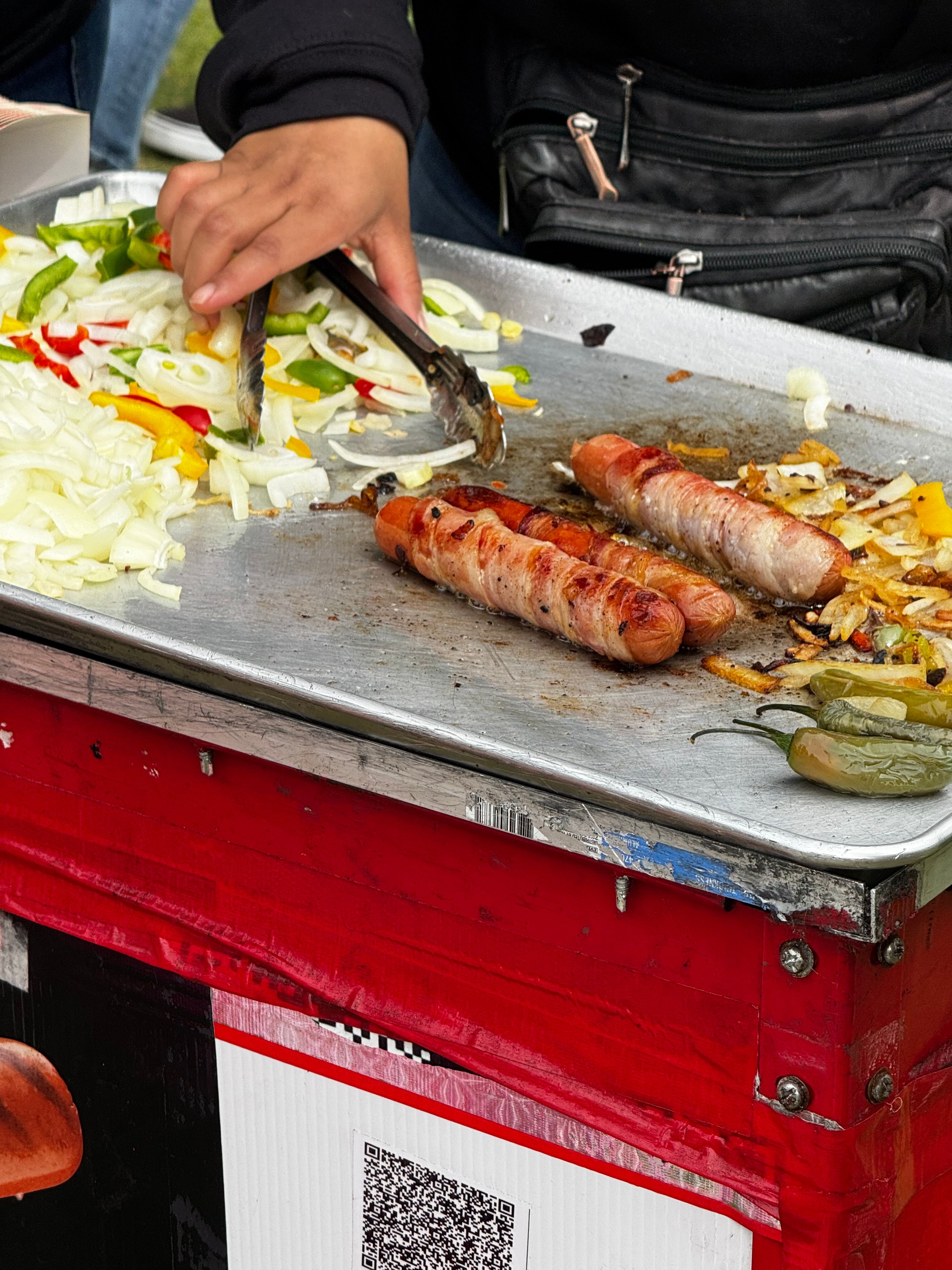
Los Angeles has one of the most recognizable stadium-adjacent street foods in the United States: the bacon-wrapped hot dog. Usually cooked on flat griddles by sidewalk vendors and topped with grilled onions, peppers, ketchup, mustard and mayonnaise, the dish is a common sight after concerts, matches and downtown events.
The city will host World Cup matches at SoFi Stadium in Inglewood, and the hot dog’s role in post-event crowds is likely to grow. Street-vending policy in Los Angeles has evolved in recent years, giving the city a more formal framework for a food culture that long operated in plain sight.
The appeal is simple. The food is portable, hot, relatively inexpensive by major-event standards, and closely tied to the Southern California game-day experience. For many fans, it is less a novelty than a ritual, which is often what makes a tournament food tradition stick.
Philadelphia, United States: soft pretzels

Philadelphia soft pretzels are expected to be one of the easiest local foods for traveling fans to find and understand. Sold from carts, convenience counters, bakeries and corner stores, the city’s version is softer and denser than mall-style pretzels and is often eaten with mustard.
Philadelphia will host matches at Lincoln Financial Field, and city leaders have stressed walkability, public transit and neighborhood identity in preparations. Pretzels fit neatly into that picture because they are cheap, handheld and tied to daily life rather than fine dining or visitor-only experiences.
The snack also carries a strong local identity. Pennsylvania has one of the deepest pretzel traditions in the country, linked to German immigrant history and large-scale baking. For international visitors, the food offers a quick lesson in regional American eating without requiring a reservation or a long detour.
Toronto, Canada: peameal bacon sandwich

Toronto’s peameal bacon sandwich remains one of the city’s most cited signature grab-and-go foods. Made with wet-cured pork loin rolled in cornmeal and served on a bun, the sandwich is especially associated with St. Lawrence Market, though versions are available well beyond that historic core.
Toronto is one of Canada’s two World Cup host cities, and local boosters have been positioning its multicultural food scene as a major asset. The peameal sandwich stands out because it connects directly to Toronto food history while remaining simple enough for visitors looking for a fast meal between events.
Despite the name, peameal bacon is not the same as standard strip bacon familiar to many U.S. travelers. That difference often turns the sandwich into a talking point, helping it work as both a practical street food and a local specialty that visitors can easily remember after one bite.
Monterrey, Mexico: carne asada tacos

Monterrey is closely associated with beef, grilling and northern Mexican cooking, making carne asada tacos a natural food ambassador for the city’s World Cup moment. Served on flour or corn tortillas and often finished with salsa, onion, avocado or charred scallions, the tacos reflect the region’s ranching and barbecue traditions.
The city will host matches at Estadio BBVA, one of Mexico’s marquee football venues. Nuevo León officials and local business groups have long promoted Monterrey as an industrial powerhouse, but major events also put focus on food, especially dishes that show how the north differs from central Mexico.
For fans traveling between host cities, that distinction matters. Monterrey’s tacos tend to emphasize smoke, beef quality and a more minimalist approach than the heavily garnished street foods found elsewhere. That regional contrast could make the city one of the tournament’s strongest food stops.
New York/New Jersey, United States: halal cart chicken and rice

The New York-New Jersey host region brings many foods into the conversation, but halal cart chicken and rice may be the most practical and recognizable street option for visitors. The dish, typically sold from carts and trucks, combines seasoned chicken over rice with lettuce, pita and white sauce, often with hot sauce on top.
Matches are set for MetLife Stadium in East Rutherford, including the final, giving the region unmatched visibility during the tournament. New York City’s halal-cart scene expanded dramatically in the last few decades and became part of the city’s everyday eating pattern for office workers, night crowds and tourists.
Its importance goes beyond convenience. The dish reflects immigrant entrepreneurship and the multicultural food economy that defines the metro area. For a global event built around national identities meeting in one place, that kind of food story is likely to resonate as much as the flavor itself.
Vancouver, Canada: salmon sandwich and fish tacos

Vancouver’s street-food reputation often centers on Pacific seafood, and salmon-based handhelds are likely to be among the city’s most sought-after World Cup bites. Depending on the vendor, that can mean a grilled salmon sandwich, a smoked salmon bun or fish tacos built around local west coast style ingredients.
Vancouver will stage matches at BC Place, bringing another global spotlight to a city that regularly markets its connection to ocean, mountains and fresh produce. Street food there tends to lean cleaner and more ingredient-driven than heavier fairground styles common in some U.S. cities.
That profile may appeal to traveling fans looking for variety during a long tournament. Seafood also gives Vancouver something distinct within the 16-city lineup. While not every visitor will prioritize fish before kickoff, the city’s local sourcing reputation makes salmon a strong candidate for a signature tournament snack.
Kansas City, United States: burnt ends

Kansas City is best known for barbecue, and burnt ends are the item most likely to pull visiting fans into the local line. The meat, usually cubed from the point end of brisket and finished with smoke and sauce, began as a barbecue byproduct before becoming one of the city’s defining dishes.
World Cup matches in Kansas City will be played at Arrowhead Stadium, and local organizers have consistently promoted barbecue as central to the visitor experience. While burnt ends are not street food in the narrow cart-vendor sense, they function like it during big events because fans can get them quickly from counters, pop-ups and tailgate-style setups.
The dish matters because it says something specific about place. Kansas City barbecue is heavily debated, deeply regional and tied to local pride. For sports travelers, foods with that kind of strong hometown ownership often become part of the trip memory as much as the result on the field.
Miami, United States: Cuban sandwich and croquetas

Miami’s street-food conversation is crowded, but Cuban sandwiches and croquetas remain two of the city’s most accessible quick bites for fans. Found in ventanitas, bakeries and walk-up counters across Miami and neighboring communities, both foods are woven into the area’s Cuban-American identity and daily routine.
Miami will host World Cup matches at Hard Rock Stadium, and South Florida officials have emphasized the region’s international character in tournament planning. That makes Miami’s food especially relevant because it shows how immigration has shaped local flavor in visible, everyday ways.
The Cuban sandwich offers a full, portable meal of roast pork, ham, cheese, pickles and mustard pressed into crisp bread. Croquetas, usually filled with ham or chicken, give fans a faster snack option. Together, they capture a city that many visitors already know through beaches and nightlife, but increasingly understand through its food.


