For decades, the American food business sold the future as something shiny, easy, and shelf-stable. What once looked innovative in test kitchens, TV ads, and supermarket aisles now often reads as a record of corner cutting, nutritional anxiety, and convenience taken too far.
That shift matters because many of these foods never disappeared. They became ordinary, and in some cases they helped define how millions of people in the U.S. eat.
TV dinners

When Swanson introduced the TV dinner in 1953, it was pitched as a modern answer to changing family life. The company sold more than 10 million units in its first full year, according to widely cited industry histories, helped by booming television ownership and postwar enthusiasm for frozen foods.
At the time, the tray itself looked futuristic. Meat, potatoes, and vegetables arrived in neat compartments, ready to heat and eat with almost no work. The meal fit an era obsessed with appliances, efficiency, and the idea that science could streamline domestic life.
Today, the same format often signals something else. The frozen tray is still cheap, still fast, and still useful for many households, but it also carries the image of sodium-heavy, heavily processed eating and dinner alone in front of a screen.
Food historians have long noted that TV dinners tracked major social change, especially women entering the workforce in larger numbers and companies building entire product lines around speed. What once symbolized liberation now often feels like a snapshot of isolation and low expectations.
Powdered meal shakes

Meal replacement powders were once sold as a sleek nutrition upgrade. Brands from the mid-20th century onward promised balanced vitamins, precise calories, and freedom from the mess and time of cooking, turning the idea of lunch into something measured by scoop and shaker bottle.
By the 1960s and 1970s, diet culture helped push the category into the mainstream. SlimFast, founded in 1977, became one of the best-known names, offering a regimented system that framed normal meals as problems to be solved by industrial formulation.
The futuristic appeal was obvious. Why waste time chewing if science could deliver protein, minerals, and energy more efficiently? In office culture, tech culture, and fitness culture, liquid meals came to stand for discipline, optimization, and productivity.
Now the same products can feel grim. They suggest skipped meals, body image pressure, and a workday so compressed that even eating is treated as inefficiency. For many consumers, the promise of engineered convenience has aged into a symbol of stress rather than progress.
Canned spray cheese

Aerosol cheese products looked like food from a space station when they rose to popularity in the 1960s. Nabisco launched Easy Cheese in 1965, and the can itself became the spectacle, turning a processed dairy spread into a novelty of pressure, motion, and instant gratification.
The appeal had little to do with traditional cheesemaking and everything to do with technological theater. A shelf-stable can that produced a bright orange ribbon on command fit perfectly with the American fascination for gadgets, packaging, and the belief that newer always meant better.
Decades later, the same product reads very differently. Spray cheese is less a miracle than a punch line, associated with ultra-processing, artificial color, and a version of convenience that solves a problem almost no one had in the first place.
It survives because it is familiar, portable, and oddly fun. But its futuristic image has curdled. What once looked like the Jetsons now feels like a reminder that some food innovations were mostly about packaging tricks and marketing flair.
Instant mashed potatoes

Instant mashed potatoes became a major grocery item in the postwar period, when dehydration technology and industrial food processing were celebrated as signs of national progress. By the 1950s and 1960s, they were marketed as a smart shortcut for the modern home.
The sales pitch was simple and effective. Real potatoes took peeling, boiling, mashing, and seasoning. A boxed flake product could deliver roughly the same comfort with far less labor, especially in a period when manufacturers aggressively linked convenience to good household management.
That promise still has practical value. Disaster kits, school cafeterias, military rations, and tight family budgets all helped keep the product relevant. Instant potatoes can be cheap, stable, and fast, which is exactly why they remain on shelves in so many parts of the country.
Still, few people confuse them with a triumph anymore. The texture and taste are often treated as the culinary definition of giving up, a food that speaks less to the future than to exhaustion, inflation, and the lowering of standards in everyday meals.
Shelf-stable white bread

Industrial sliced white bread was once promoted as scientific progress you could eat. Wonder Bread, introduced nationally in the 1920s and associated with sliced bread after 1930, used enrichment and uniformity as selling points, framing factory production as cleaner, smarter, and more reliable than older methods.
That message mattered in a period when nutrition science was entering consumer advertising. Added vitamins were promoted heavily, and bright packaging helped turn a basic staple into a symbol of modern abundance. Softness, consistency, and long shelf life were treated as proof of improvement.
For years, that image held. Packaged bread fit school lunches, suburban shopping, and a fast-growing supermarket system. It also reinforced the idea that standardization was inherently good, even if it stripped flavor and texture from a food that had once been more varied.
Now, ultra-soft white bread often carries a down-market sadness. It is associated with corners cut, cheap fillers, and meals built around endurance rather than enjoyment. The food did not change as much as public expectations did, and the result is a very different mood.
Margarine

Few foods were wrapped in the language of modern science more than margarine. Originally developed in the 19th century, it became a major U.S. household product in the 20th, especially as manufacturers promoted vegetable-based spreads as affordable, efficient, and in many cases healthier than butter.
By the postwar decades, margarine ads leaned hard on chemistry as reassurance. A product made by industrial process was not framed as suspicious. It was framed as advanced. Households were told they were choosing the smart, up-to-date option instead of an older, heavier fat.
That confidence eroded as nutrition guidance changed. Concerns over trans fats, partially hydrogenated oils, and labeling practices badly damaged margarine’s clean scientific image. Federal regulators later moved to effectively remove artificial trans fats from the U.S. food supply, underscoring how much the story had shifted.
Margarine still exists in many forms, and some newer spreads differ significantly from older formulas. But the emotional residue remains. A food once sold as the future of health now often feels like a case study in how confidently the food industry can get things wrong.
Protein bars
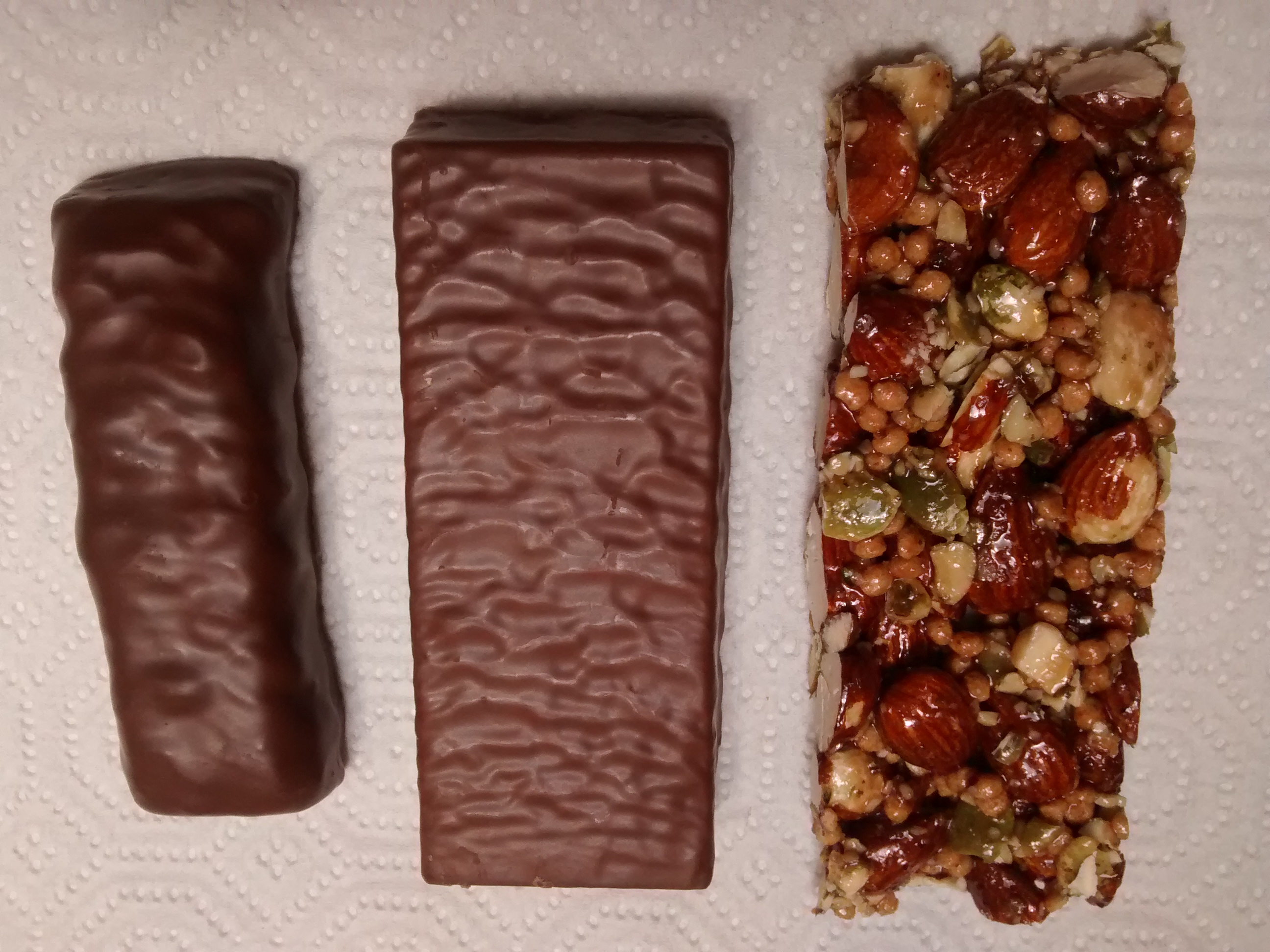
Protein bars became especially prominent in the 1990s and 2000s, as sports nutrition moved into the mainstream and supermarkets filled with products promising fuel, recovery, lean muscle, and appetite control. A candy-bar shape wrapped around fortified paste looked efficient, measurable, and modern.
The broader market only grew. According to industry trackers, the U.S. nutrition bar category expanded as fitness culture, meal skipping, and on-the-go eating became more common. The bars were sold as practical tools for workers, students, athletes, and basically anyone short on time.
Their futuristic appeal came from compression. Instead of a meal, you had macros. Instead of hunger, you had function. Packaging highlighted grams of protein, fiber, and added nutrients, often using the language of performance rather than pleasure or ordinary eating.
Now many consumers see them as edible paperwork. The texture can be chalky, the ingredient lists long, and the marketing strangely joyless. Protein bars are still useful, but they often feel like the food equivalent of answering emails at 9 p.m.
Instant ramen cups

Cup-style instant noodles were a genuine food technology breakthrough. Nissin introduced Cup Noodles in Japan in 1971, building on the success of instant ramen and creating a portable, self-contained meal that spread internationally through convenience stores, supermarkets, offices, and college dorms.
The invention answered several needs at once. It was cheap, light, quick to prepare, and easy to stock. For students, shift workers, and low-income households, it offered hot food in minutes. For the broader culture, it looked like a taste of compact, efficient modern living.
That image has dimmed because the cup noodle became shorthand for financial strain. In the U.S., it is often linked to broke college years, late-night work, and months when grocery budgets do not stretch far enough. Its low price remains part of its power and its stigma.
Nutrition critics have also kept pressure on the category because of sodium levels and processing concerns. The food is still beloved and globally important. But as an emblem of the future, it now feels less exciting than economically revealing.
Energy drinks

Energy drinks entered the U.S. mainstream as a hypermodern promise. Red Bull launched in Austria in 1987 and entered the American market in 1997, helping turn caffeine, taurine, B vitamins, and sleek branding into a new category aimed at stamina, focus, and nonstop activity.
The drinks fit a culture that increasingly celebrated hustle. Students used them to stay awake, workers used them to push through long shifts, and marketers wrapped the cans in the imagery of speed, risk, and high performance. The product was not just a beverage. It was a posture.
Over time, public health concerns complicated that image. Researchers, doctors, and regulators have repeatedly raised questions about caffeine load, marketing to younger consumers, and emergency room visits involving highly caffeinated drinks, especially when mixed with alcohol or used excessively.
As a result, the futuristic vibe now often feels darkly familiar. The can still signals intensity, but it also suggests overwork, sleep deprivation, and a culture trying to chemically outrun its own limits. That is less tomorrow than burnout in aluminum.
Lab-grown and engineered novelty foods

Some foods feel depressing before they even fully arrive. Since the 2013 debut of the first widely publicized lab-grown burger, cultured meat and highly engineered alternative foods have been presented as the next frontier, with backers citing climate pressure, land use, and animal welfare.
There have been real milestones. In 2023, the U.S. Department of Agriculture cleared the sale of cell-cultivated chicken from Upside Foods and GOOD Meat, marking a major regulatory moment for the sector. Investors, startups, and food scientists framed that approval as a turning point.
But the emotional response has been complicated. For many consumers, futuristic food no longer automatically means hopeful food. It can mean something expensive, heavily processed, venture-backed, and detached from the basic pleasure and cultural meaning people want from eating.
That does not mean the technology will fail. It means the mood has changed. The most telling thing about futuristic foods in 2026 may be that Americans are no longer asking whether science can make dinner possible. They are asking why ordinary food feels so hard to secure.